Diversified Revenue
Explore complementary business activities that reduce reliance on a property's existing primary revenue stream.
Unlocking New Economic Value from Land, Infrastructure and Existing Businesses
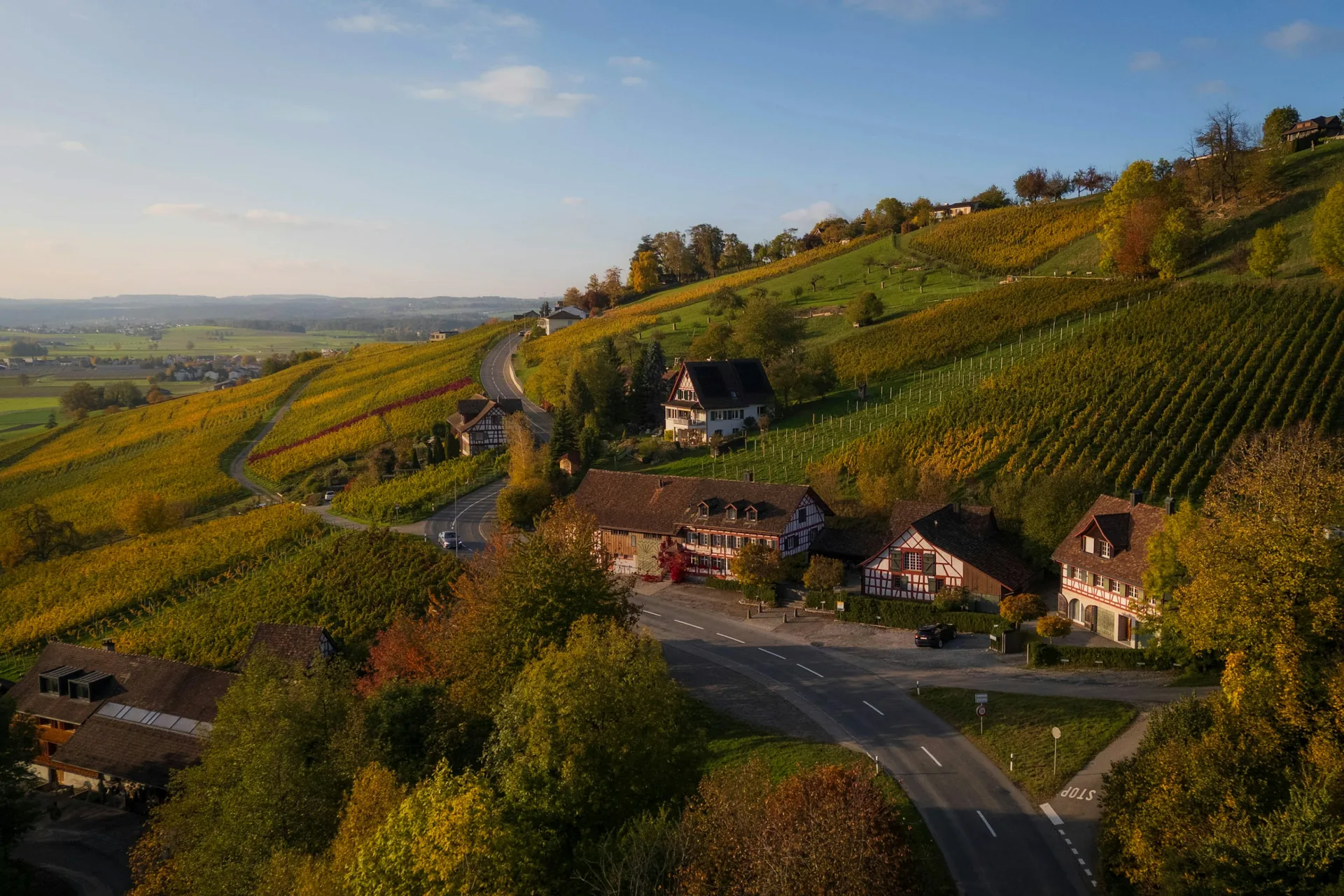
Reference photograph — not a completed Regenomy project. Photo by Pascal Debrunner on Unsplash.
Many established properties hold greater potential than their current business models can realize.
Wineries, golf courses, rural resorts and heritage estates often possess valuable land, existing infrastructure, recognizable identities and established customer relationships.
Yet changing market conditions, operating costs, environmental pressures and outdated business models can limit their economic performance.
Regenomy Assets works with owners, developers and long-term investors to explore how these properties can be repositioned into productive, resilient and diversified regenerative destinations.
By combining regenerative hospitality, food systems, wellness, agriculture, ecological restoration and complementary infrastructure, we seek to create new economic opportunities while strengthening the long-term value of the underlying property.
A property's future value is not necessarily limited to its existing business.
A winery can evolve into a premium hospitality and culinary destination.
An underperforming golf course can become a regenerative landscape supporting wellness, recreation and compatible accommodation.
A rural resort can expand beyond conventional lodging into gastronomy, wellness, nature-based experiences and local food production.
A heritage estate can develop new uses that support its preservation and long-term economic viability.
The opportunity lies in identifying complementary activities that reinforce each other, rather than relying on a single revenue source.
Our approach examines the property as an integrated economic and ecological system.
All opportunities are subject to commercial, environmental, planning and financial feasibility.
Explore complementary business activities that reduce reliance on a property's existing primary revenue stream.
Evaluate opportunities to reuse buildings, utilities, access roads and established facilities.
Create stronger reasons for visitors to arrive, stay longer, return and participate in premium experiences.
Identify opportunities for agriculture, food forests, regenerative landscapes and appropriate ecological uses.
Address water, energy, infrastructure and operating vulnerabilities as part of the development strategy.
Help property owners explore financially viable futures that respect the character, history and long-term significance of their land.
Every asset category has a different business model, regulatory environment and transformation potential.
Regenomy Assets develops site-specific strategies designed around existing strengths and new economic opportunities.
Beyond Wine Production: Creating Integrated Vineyard Destinations
Traditional wineries may depend heavily on wine sales, tasting rooms and distribution.
We explore how established wine estates can diversify through premium accommodation, regenerative hospitality, destination gastronomy, wellness, food forests and complementary agricultural enterprises.
The objective is not necessarily to replace the winery's existing business, but to strengthen the overall estate through additional, mutually reinforcing economic activities.
Potential solutions include Fresco Camp, Fresco Table, regenerative agriculture and curated culinary experiences.
Reimagining Golf-Centric Real Estate
Golf courses can occupy substantial land while requiring significant resources for maintenance, irrigation and operations.
Where the existing economics are challenged, alternative or complementary land uses may offer a more sustainable future.
We explore opportunities for regenerative hospitality, wellness, nature-based recreation, productive landscapes, ecological restoration and appropriate mixed-use development.
Every opportunity requires careful evaluation of zoning, water rights, deed restrictions, community concerns and development feasibility.
Transforming Accommodation into Experience Destinations
Existing rural resorts and retreat properties may already possess valuable infrastructure and access to attractive natural landscapes.
We explore opportunities to reposition them through biophilic hospitality, premium wellness experiences, distinctive gastronomy, local food production and nature-based programming.
The objective is to strengthen market differentiation and develop additional revenue sources while making productive use of existing assets.
Preserving Heritage While Creating New Economic Uses
Historic properties, family estates and other legacy assets often possess distinctive architecture, cultural identity and valuable landscapes.
Our approach explores adaptive reuse, regenerative hospitality, culinary experiences, education, ecological restoration and other compatible economic activities.
We seek transformation strategies that balance commercial feasibility with preservation and long-term stewardship.
Ranch-specific transformation opportunities in the United States are addressed through our dedicated American Ranch Systems platform.
American Ranch Systems works with ranch owners and families exploring agricultural diversification, nature-based hospitality, resilient food systems, ecological stewardship and long-term ranch legacy.
Every property is different.
We do not begin by proposing a predetermined number of cottages, a standard greenhouse or an identical development model.
We begin by understanding the existing business, the land, the market and the owner's long-term objectives.
Our methodology follows four development stages.
Before committing to a major asset transformation, owners need to understand the property's potential commercial models, financial implications, development constraints and investment requirements. Regenerative Discovery provides a structured framework for evaluating these considerations and establishing a practical development pathway.
Where Discovery establishes a viable opportunity, we coordinate the next stage of project development.
This may include master planning, detailed feasibility, design coordination, operating-partner engagement, permitting strategy, capital budgeting and investment preparation.
Depending on the project and the agreed commercial relationship, development may be undertaken through owner-funded investment, joint ventures, investor participation or project-specific investment vehicles.
We coordinate appropriate development partners, project structures and implementation responsibilities.
A successful transformation requires capable operators, sound financial management, appropriate stewardship and continuous operating performance.
We seek to align economic activity with the long-term productivity and resilience of the property.
Project approvals, financing and financial performance are subject to feasibility and are not guaranteed.
Different Properties. Different Solutions. One Integrated Approach.
Asset transformation is not a fixed product package.
We select the most appropriate components based on the site's market, existing infrastructure, ecology, operating capabilities and financial feasibility.
Premium biophilic accommodation, nature-based experiences and regenerative hospitality designed to complement the character of the property.
Destination dining integrating regional cuisine, local agriculture and, where feasible, controlled-environment greenhouse production.
Localized food production, processing and preservation infrastructure, including controlled-environment agriculture and freeze-drying where commercially appropriate.
Food forests, regenerative landscapes, biodiversity enhancement and productive ecological systems.
Place-based wellness, nature immersion, gastronomy, cultural programming, education and curated destination experiences.
Integrated residential communities combining housing, food systems, wellness and resilient infrastructure where land use, market demand and permitting support residential development.
We work with:
Owners seeking to improve their property's economic future without necessarily abandoning existing operations.
Families exploring new income, generational stewardship and alternative ownership or development structures.
Developers seeking differentiated, integrated uses for land-intensive real estate.
Owners exploring repositioning, expansion and new destination concepts.
Investors evaluating the redevelopment or transformation of existing operating assets.
Depending on circumstances, potential structures may include:
The appropriate structure depends on valuation, ownership objectives, regulatory requirements and financial feasibility.
Regenerative asset transformation is the strategic repositioning of an existing property or business to create additional economic uses while integrating productive land systems, ecological stewardship, resilient infrastructure and long-term asset value creation.
Conventional redevelopment often focuses primarily on changing a property's physical use or market position. Our approach examines how hospitality, agriculture, food systems, wellness, ecology and infrastructure can form an integrated economic model suited to the property.
Potentially. A winery may support accommodation, culinary experiences, wellness or other complementary activities where market demand, zoning, licensing and infrastructure permit.
Some golf courses can be repositioned or redeveloped. Feasibility depends on land-use controls, deed restrictions, environmental conditions, community requirements and financial viability.
Not necessarily. Depending on project requirements, opportunities may include owner-funded development, joint ventures, land contributions or acquisition structures.
No. Fresco Camp is one potential hospitality component. The selected transformation model depends on the property's needs and economics.
The process begins with Regenerative Discovery, which assesses the existing property and develops a preliminary transformation strategy and financial framework.
An established property may have a more productive future than its current business model suggests. Regenomy Assets works with owners, developers and long-term investors to evaluate opportunities for commercial repositioning, integrated development and regenerative value creation.
Discuss Your PropertyShare only a preliminary overview. Financial statements and confidential asset information are not required in the initial enquiry.
Working ranch enquiries are handled by American Ranch Systems.